
Arrest Warrants in Motley County
An arrest warrant is a magistrate's written order telling a peace officer to take a person into custody. Texas law sets its required parts. The paper must identify or describe the accused, name the offense, and carry the magistrate's signature and title. The process starts with a sworn complaint and judicial review. A public web search comes last, if at all. Motley County criminal cases run through County Court or the 110th District Court, depending on the level. The sheriff is the likely local service contact. Other authorized officers may execute a warrant too, while the issuing court keeps the case file and the next setting.
Motley County Arrest Warrant Affidavits
A complaint and its supporting affidavit show what the magistrate was told. The Motley County file may hold more. Look for the signed warrant, bond terms, docket entries, and the return showing what the executing officer did. Give the clerk the case or cause number. Leave private identifiers out. A public request should name an existing document, not ask the clerk for a legal finding. The clerk can explain whether a record is open now or falls under a lawful exception.
What a Motley County Arrest Warrant Contains
Motley County posts no sample warrant. No local warrant-number pattern appears either. The fields people expect in such papers come from common court-file practice, and the real document, along with any protected details, depends on the case and access law.
| Cause number | Links the order to the court file; no local warrant format was published. |
|---|---|
| Person or description | Name or identifying description required by the statute. |
| Charge or offense | Offense stated in the warrant and complaint. |
| Issuing magistrate | Judge or magistrate name, title, and signature. |
| Bond terms | Any amount or conditions recorded by the court. |
| Return and status | Service details and later court entries, when available. |
Motley County Warrant Record Access Limits
Article 15.26 governs public access to an arrest warrant and its supporting affidavit once the warrant is executed or returned, subject to other applicable law. Before that point, release can wait. An open investigation or another exception may apply. Juvenile papers are different again. Family Code §58.010 gives juvenile arrest warrants and supporting papers their own confidentiality protections. The Rule 12 policy from Texas courts lays out the court-record framework, and the Motley County clerk can say what gets released or redacted.
How Arrest Warrants Are Served
The Motley County Sheriff's Office is the local contact for service, but state law lets other authorized peace officers or agencies execute process. Matador and Roaring Springs directories list no police chief or department contact. That gap proves nothing about arrangements. The sheriff's public page lists (806) 347-2234. It promises no warrant-status answer by phone. For case status or a recall, call the clerk of the issuing court. Ask the sheriff which office handles execution.
Motley County Court and Sheriff Roles
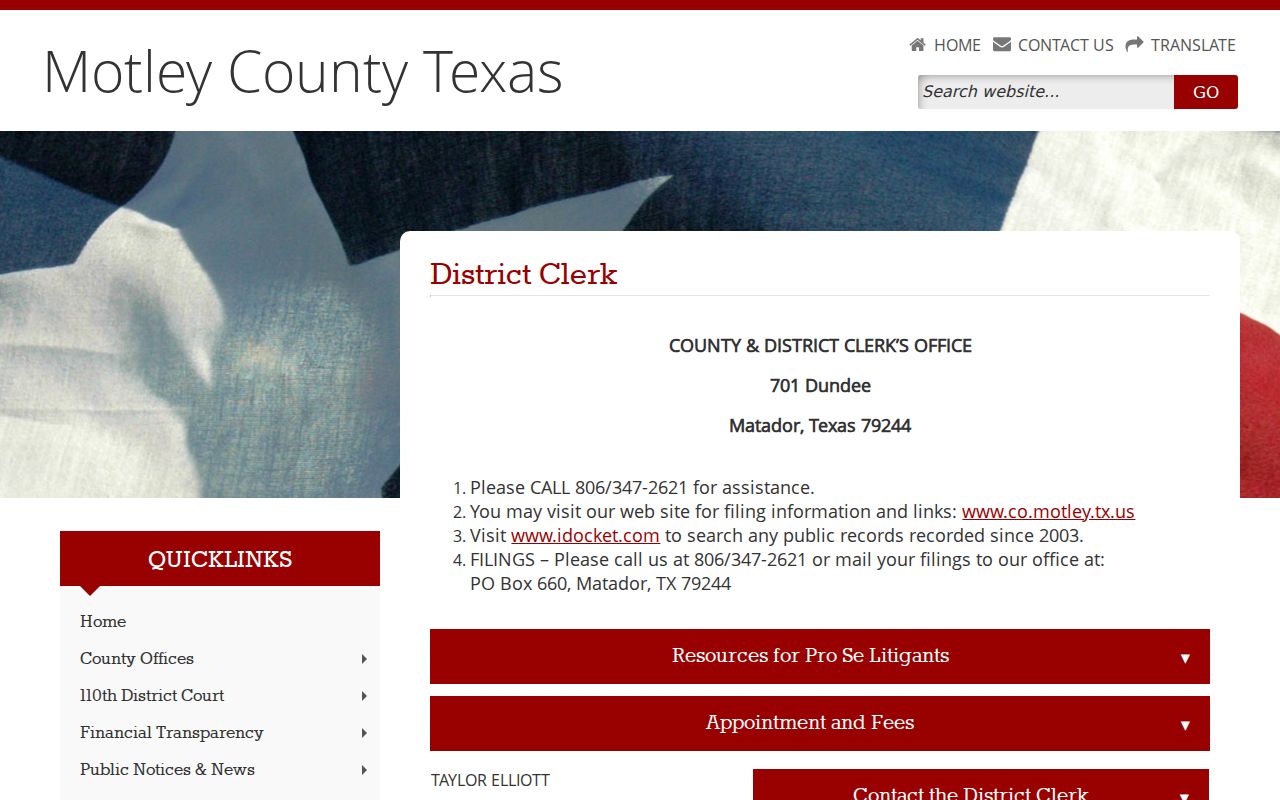
County Court and the 110th District Court sit at different case levels. The district-court office sits in Floydada. At the Matador courthouse, the County and District Clerk routes both county and district records. The sheriff may serve a warrant. Only the issuing court can set bond, recall process, or set the case for hearing. The county's District Clerk page posts district-court contact details.
Take record questions to the clerk and execution questions to the sheriff. In Motley County the two jobs touch, but they never swap.
Arrest Warrant vs Summons vs Bench Warrant
An arrest warrant authorizes custody on a criminal complaint. A summons just orders an appearance. No arrest comes first. A bench warrant or capias usually follows a missed court duty in a case already open. Courts word things differently, so ask for the exact paper and issuing court, and see Motley County bench warrants for that process.
| Feature | Arrest Warrant | Summons | Bench Warrant |
|---|---|---|---|
| What it orders | Arrest under the written order | Appear at a stated time | Bring the person before the court |
| Basis | Sworn complaint and probable cause | Notice to appear | Missed setting or court obligation |
| Who issues it | Magistrate or judge | Court or authorized official | Judge in the existing case |
| How to respond | Contact counsel and issuing court about appearance and bond | Appear as directed | Ask issuing court about recall or a new setting |
Motley County Criminal Warrant Court Records
Motley County felony cases go to the 110th District Court, listed at 105 South Main, Room 204, in Floydada. The clerk works from the Matador courthouse. Different offices entirely. Check the case caption before you drive. Call the County and District Clerk at (806) 347-2621 for the county record route, or the district court at (806) 983-3384 for its contact instructions. The county District Judge page carries the current county-facing court information.
What to Do If There Is a Warrant for You
A lawyer can confirm the issuing court, the process type, bond status, and the safest route for a voluntary appearance. You may arrange a surrender, post bond, or ask the court to recall or quash the process. Everything depends on the case. A payment processor can't decide that. Neither can a sheriff's contact form. Motley County publishes no jail booking manual, no approved-bondsman list, and no after-hours warrant desk. Ask where to appear and what to bring. Then keep the written order, your receipt, and the next setting once the court acts.
Important: Consult defense counsel before arranging a serious-case appearance; the sheriff cannot promise non-arrest or recall, and the judge controls the case.
Federal Arrest Warrants Are Separate
Federal warrants live in a separate world from the Motley County clerk, the JP courts, and the sheriff. None of those local offices can see or serve one. Federal trial matters for Motley County go through the Northern District of Texas, Lubbock Division. The Lubbock Division page lists the court location, and the U.S. Marshals Service explains who executes federal warrants. For a specific case, the federal clerk or your lawyer is the right call. PACER offers docket access, not a warrant roster.